This document is relevant for: Inf2, Trn1, Trn2, Trn3
AI Inference on Neuron#
Overview#
AWS Neuron provides optimized AI inference on AWS Trainium and Inferentia instances across diverse AI workloads, from Large Language Models (LLMs) to image/video generation models and custom machine learning architectures. The Neuron SDK enables optimized performance tuning for both latency-sensitive applications like interactive chatbots and high-throughput batch processing workloads. Whether you’re building real-time generative AI applications, agentic AI systems, or processing offline batch requests, the Neuron SDK provides the flexibility to optimize inference for your specific performance requirements.
Deploying Production-Ready Models on Trainium/Inferentia#
The Neuron SDK enables deployment of production-ready popular LLM models like Meta Llama-3.3-70B and OpenAI gpt-oss-120B using vLLM. For model architectures not supported through vLLM, such as diffusion transformer models (Flux), you can integrate with other model servers directly using NxD Inference APIs.
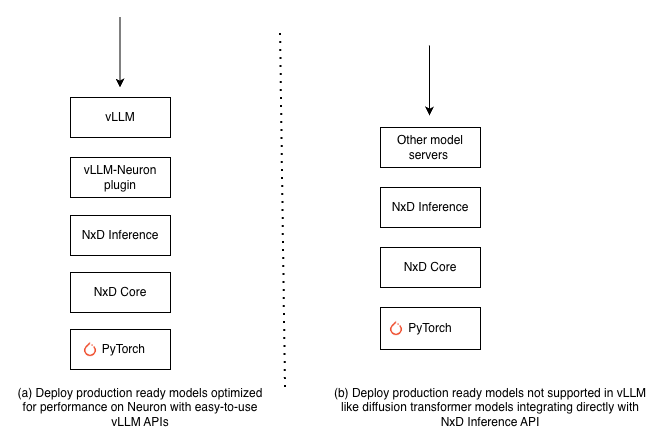
Fig. 1 Neuron Inference Deployment options#
Deploy Production-Ready Models with vLLM#
Option 1: vLLM with NxD Inference (recommended)
vLLM with NxD Inference uses the neuronx-distributed-inference library for
model execution. It supports Inf2, Trn1, and Trn2 instances. Supports vLLM 0.16
via plugin version 0.5.x.
Once you install the latest Neuron SDK, you can get started using vLLM to serve production-ready models:
git clone --branch "0.5.3" https://github.com/vllm-project/vllm-neuron.git
cd vllm-neuron
pip install --extra-index-url=https://pip.repos.neuron.amazonaws.com -e .

# Start the vLLM server
vllm serve meta-llama/Meta-Llama-3-8B-Instruct \
    --tensor-parallel-size 32 \
    --max-num-seqs 4 \
    --max-model-len 128 \
    --block-size 32 \
    --num-gpu-blocks-override 256
Neuron also offers AMIs with pre-installed Neuron SDK dependencies and pre-built inference containers for production workloads in Kubernetes environments.
You can refer to the detailed developer guide on vLLM support for the list of features and models supported through vLLM with NxD Inference.
Option 2: vLLM Neuron (Beta — Trn2/Trn3 only)
vLLM Neuron is an enhanced vLLM plugin that does not depend on NxD Inference — model implementations live directly within the plugin. It supports advanced inference features including disaggregated inference, segmented prefill, and EAGLE3 speculative decoding.
vLLM Neuron is currently in Beta and active development. It supports vLLM 0.24.0 on Trn2 and Trn3 instances.
git clone -b release-0.24.0.1.1.0 https://github.com/vllm-project/vllm-neuron.git
cd vllm-neuron
pip install --extra-index-url=https://pip.repos.neuron.amazonaws.com -e .

vllm serve openai/gpt-oss-20b \
    --tensor-parallel-size 8 \
    --max-model-len 8192 \
    --max-num-batched-tokens 4096 \
    --max-num-seqs 4
For Inf2 and Trn1, or models not yet supported, use Option 1. See the vLLM Neuron documentation.
Option 3: vLLM Omni Neuron (Beta — diffusion/multimodal, Trn2/Trn3 only)
For diffusion and multimodal generation models such as video generation, use the vLLM Omni Neuron plugin. It is an out-of-tree Neuron backend for vLLM Omni that reuses vLLM Omni’s upstream serving components and adds Neuron-specific execution, caching, and sharding.
vLLM Omni Neuron is currently in Beta and active development. The initial release supports the Wan2.2-T2V-A14B (text-to-video) and Wan2.2-I2V-A14B (image-to-video) models on Trn2 and Trn3, and supports vLLM Omni 0.24.0.
git clone https://github.com/aws-neuron/vllm-omni-neuron.git
cd vllm-omni-neuron
pip install --extra-index-url=https://pip.repos.neuron.amazonaws.com -e .
vLLM Omni Neuron is also available as a published Neuron Deep Learning Container (DLC) that bundles vLLM Neuron, the compiler, NKI, and the Neuron runtime. For the DLC install and full setup details, see the vLLM Omni Neuron setup guide.
vLLM Omni Neuron provides offline generation through the Omni.generate API and
online serving through an OpenAI-compatible /v1/videos endpoint. For detailed
quickstart guides and documentation, see the
vLLM Omni Neuron documentation.
Integrate with NxD Inference APIs for Custom Model Serving Deployments#
If you are looking to deploy models beyond standard LLM architectures, and beyond the diffusion and multimodal models supported by vLLM Omni Neuron, NxD Inference provides direct API integration options that you can integrate with general-purpose model serving frameworks like FastAPI or Triton Inference Server. For example, you can refer to the Flux tutorial to learn how to integrate directly with NxD Inference APIs.
Similarly, if you want to integrate LLM model serving with model serving options other than vLLM, you can integrate directly with NxD Inference. However, you will need to make custom changes to the scheduler along with any modifications required to make it compatible with your desired model server.
Implementing Custom Models or Performance Optimizations#
NxD Inference Library#
NxD Inference is a PyTorch-based open-source library that provides reference implementations for optimizing popular dense LLM models, MoE LLM models, and image generation models like Llama-3.3-70B, gpt-oss-120B, and Flux on Neuron. The NxD Inference library provides key model building blocks such as different attention techniques, distributed strategies like Tensor Parallel, Expert Parallelism, speculative decoding techniques, and NKI kernels for popular model architectures that you can use to quickly build custom LLM and other ML model architectures.
You can use the model onboarding guide to get started implementing custom models on Neuron. Similarly, you can extend and implement custom performance optimizations on models already implemented in NxD Inference. Once you have implemented the model in NxD Inference, you can either integrate it with vLLM as described in the model onboarding guide or integrate it with another model serving framework.
NxD Inference is an open-source library with source code publicly available on GitHub. We invite you to contribute custom model implementations or performance optimizations by opening a PR on GitHub.
Implementing Custom Models in vLLM Neuron (Beta)#
If you are targeting Trn2/Trn3 and looking to implement custom model implementations using the enhanced vLLM Neuron plugin (Beta), see the model onboarding guide and vLLM Neuron documentation.
Implementing Custom Diffusion Models in vLLM Omni Neuron (Beta)#
If you are targeting Trn2/Trn3 and looking to bring up a custom diffusion or multimodal generation model, the vLLM Omni Neuron plugin (Beta) ships Neuron-optimized NKI kernels and reference model implementations that you can adapt for your own model. See the model onboarding guide and vLLM Omni Neuron documentation.
Implementing Custom Models Directly on PyTorch#
If you want to implement models directly on PyTorch without using the NxD Inference library and need more fine-grained control, you can use the NxD Core library that offers Neuron essential primitives like tracing and compilation. The Llama-3.2-1B example provides a sample reference implementation showing how to build custom models with the NxD Core library.
If you are developing custom models on Inf2 and Trn1 directly on PyTorch, you can use PyTorch/XLA 2.9 for Inf2/Trn1, which is described in maintenance mode.
This document is relevant for: Inf2, Trn1, Trn2, Trn3